

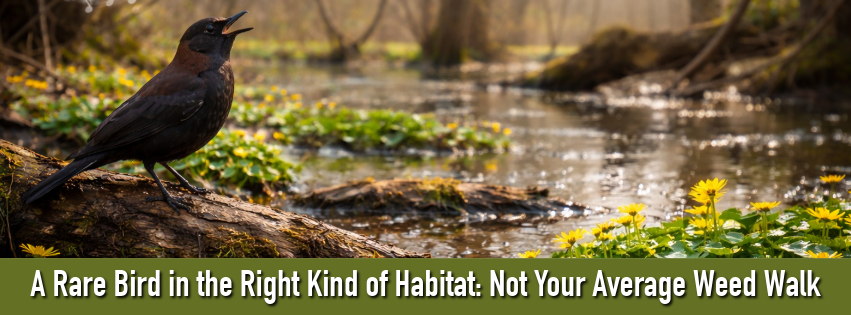
A Rare Visitor on The Farm
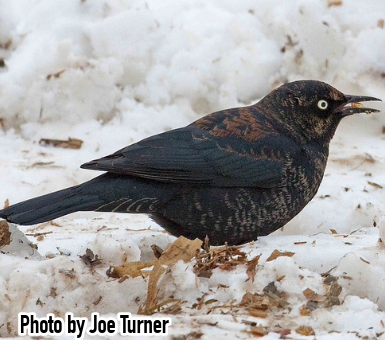
While we were out yesterday searching for invasive lesser celandine, we kept hearing birds calling overhead that didn’t sound quite like the usual late-winter flock. After a closer look, we realized we were listening to Rusty Blackbirds, a species that has become increasingly uncommon across much of its range.
These birds are currently listed as vulnerable, with estimates suggesting an 85–99% population decline over the last forty years, and they are being evaluated for possible threatened or endangered status in parts of their range.
More Than Just a Weed Walk
Rusty Blackbirds tend to avoid the kinds of places where most people notice birds. They are not usually found in roadside ditches, neighborhood ponds, or city parks. Instead, they prefer harder-to-reach wet habitats — wooded swamps, flooded bottomlands, and boggy areas that stay wet through much of the year. They breed in spruce bogs across Alaska and northern Canada, then migrate south to winter in riverine swamps along the coastal plain and throughout the Mississippi Valley.”
That habitat preference makes sightings in Hamilton County fairly uncommon.
According to iNaturalist records, there have only been 29 documented observations here in nearly twenty years.
Habitat Matters
Hearing them yesterday, calling over the woods while we were working on invasive plant removal, was a good reminder of why these wet areas matter. Places that may seem muddy, inconvenient, or difficult to manage often provide the exact conditions that certain species depend on.
A birder friend has encouraged me to report the sighting to the Ohio Department of Natural Resources, which I plan to do. Observations like this help build a better picture of where these birds are still showing up, and what kinds of habitats are continuing to support them.
It’s not every day that a routine trip to look for invasive plants turns into a reminder that we’re sharing the woods with something rare.
Read more -> Creature Feature by the Columbus Audubon