

Packing a Toothbrush and a Little Doubt
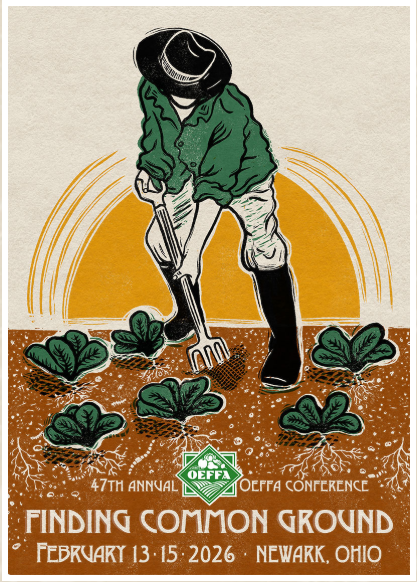
I didn’t originally plan on attending the 2026 OEFFA (Ohio Ecological Food and Farm Association) conference. But when a last-minute conflict opened up a ticket, I found myself packing my toothbrush, a notebook, and heading out the door.
I was excited, of course. I love learning and I love conferences. But if I’m being honest, there was a tiny, nagging seed of nervousness in my gut.
See, I may work on a farm, but I’m an administrator. My “farm tools” are usually a keyboard and a camera, not a trowel or a pitchfork. I couldn’t help but wonder: What if I’m not “farmer” enough and I stick out like a sore thumb? Or am I wasting a seat that a “real” grower who spends their day in the soil could use more directly?
I knew I would walk away with great information, but I couldn’t have known how much I needed to be there.
 The “Organic” Skeptic in the Front Row
Before this weekend, I had mostly thought about organic through the lens of climate change and animal welfare.
I care deeply about wildlife, more so than people at times. I care about not poisoning birds and about how animals are treated. If organic meant fewer chemicals in waterways and more humane systems, I was on board with that.
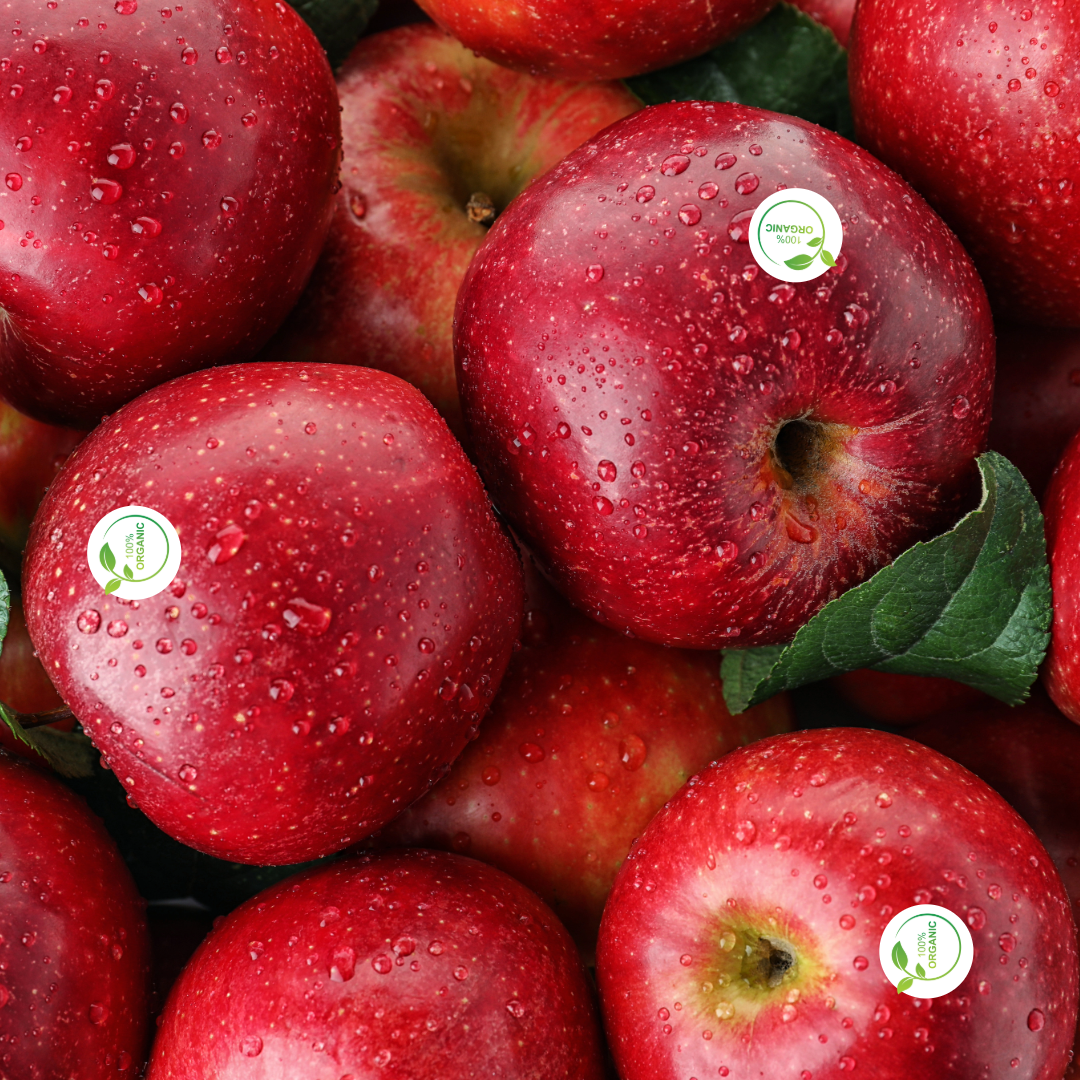
But when it came to the actual grocery store, that little organic sticker on a waxed apple often felt like a marketing ploy: expensive, trendy, and tangled in government policies and corporate loopholes. I quietly filed it away in the category of “good in theory, complicated in reality,” and focused instead on buying local goods when I could afford to do so and supporting shops and food producers I personally trusted.
Even when I started working on the farm, I didn’t realize how narrow that lens was.
My Ode to Food
I LOVE food.
Not in a casual, “oh that looks delicious” way, and definitely not in a “food is my fuel” kind of way. I’m talking about a full-body, food is my identity kind of love. Food has always been central to my life.
I came by this love honestly. Food wasn’t just something we ate — it was how we gathered, how we celebrated, how we connected.
My family owns a food shop in Findlay Market that opened the year I was born so great food was always nearby. And when my Lebanese grandmother came to stay with us, breakfast looked like a feast fit for a royal army. By the time breakfast was over and we were so full you had to roll us away from the table, she would be right back into the kitchen prepping for lunch.
Food was how we showed love.
But even as a self proclaimed foodie, my relationship with health has always been… complicated.
Growing up in the 90s, “healthy” looked very different than it does today. My love of food has always shown on my body, so my early education in nutrition was dictated by diet culture. I learned that “obliterated” steamed veggies doused in butter-flavored spray were zero points! And sugar free fruit-flavored powders mixed into fat free whipped dairy(like) toppings could satisfy cravings without guilt! As long as the number on the scale went down, you were getting healthier.
Later, in my twenties,I went through my own personal “body confidence renaissance” and I swung in the complete opposite direction. I decided I would rather be “fat and happy” and the term diet (and nutrition, by association,) became a curse word. As long as I could hike, travel, and live the adventures I wanted, I was healthy enough for me!
As time went on health has come to mean many different things to me. It’s been personal. It’s been complicated. And it has very rarely been simple.
Not New Facts. A New Picture.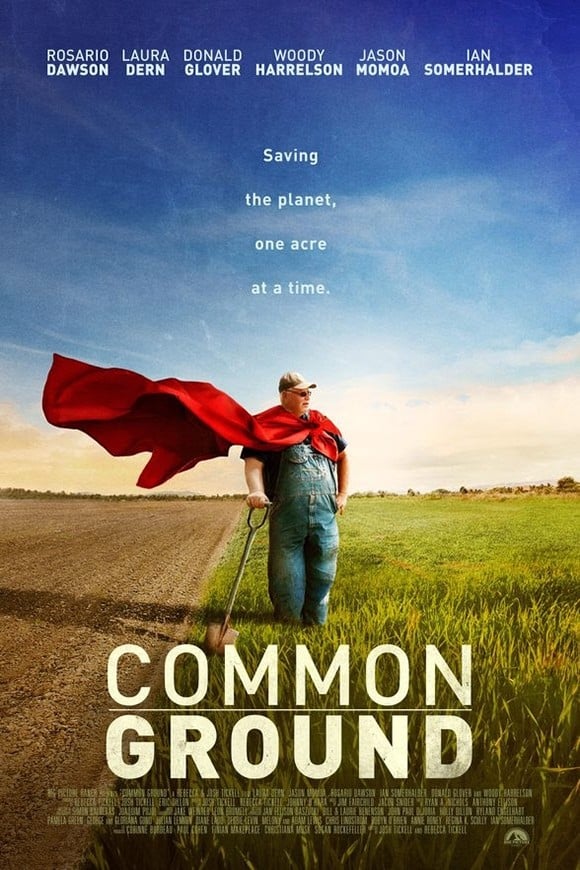
One of the first sessions I attended at the conference was a screening of the documentary Common Ground, a documentary that brought a lot of familiar ideas into sharper focus..
It contrasts dominant modern farming systems that leave many farmers reliant on chemicals—often at the cost of their health—and trapped by debt, contracts, and policy incentives. Alongside that reality, it highlights farmers who are rebuilding soil health through regenerative practices, improving water retention, biodiversity, and long-term resilience along the way. The film is a reminder that what we eat, and how it’s grown, shapes not just landscapes, but communities, power structures, and more.
One of the clearest takeaways is that when soil is healthy, it holds water better, needs fewer chemical inputs, and supports stronger plants. Common Ground offers an easy-to-understand starting point for anyone curious about how food is grown—and why the way we farm matters to all of us, whether we are farmers or not.
What surprised me most that weekend wasn’t that I learned brand-new facts (though I did). It was how everything connected.
The film zoomed out. It wasn’t just about avoiding chemicals or choosing one label over another. It was about systems: Soil, Policy, Economics, Community.
When someone you love does everything “right” and still gets sick, it complicates the story of personal responsibility. It makes you question how much of health is individual choice and how much is shaped by larger systems.
The conference didn’t give me neat answers. It gave me a clearer framework.
- Healthy soil leads to healthy plants.
- Healthy plants support healthy animals.
- Healthy animals and crops nourish healthy people.
- Healthy people build healthy communities.
It sounds like simple common sense when written in a straight line. But seeing it lived out through farmers, researchers, and organizers who are proving it works changed something for me. The “organic” label stopped being a marketing sticker and started being a relationship.
The Hard Questions and the Hope
The film and several sessions raised hard questions about policy, power, and the role of greed in shaping our food systems. It can feel overwhelming to think about how large-scale decisions affect small farms and individual families.
But what moved me most wasn’t the criticism. It was the proof.
There are alternatives that are working.
Regenerative organic farming is not a fringe experiment. It is happening at scale. Farmers across political and religious lines are collaborating. They are sharing knowledge, equipment, and leadership. They are staying centered on values while finding common ground.
Our Keynote speaker, Anneliese Abbott said, “The future is going to be what we want it to be.” That line stuck with me.
We may not be able to change the entire world overnight. But we can change our world. We can change our communities. We can decide how we care for our soil, our land, our neighbors.
Bringing Big Ideas Back to the Farm
I didn’t just come home inspired. I came home with ideas.
One workshop focused on partnerships to scale up value-added local food. It explored practical ways to extend the life of fresh food, reduce waste, and help more people access it. These weren’t abstract theories. They were collaborative models already in motion.
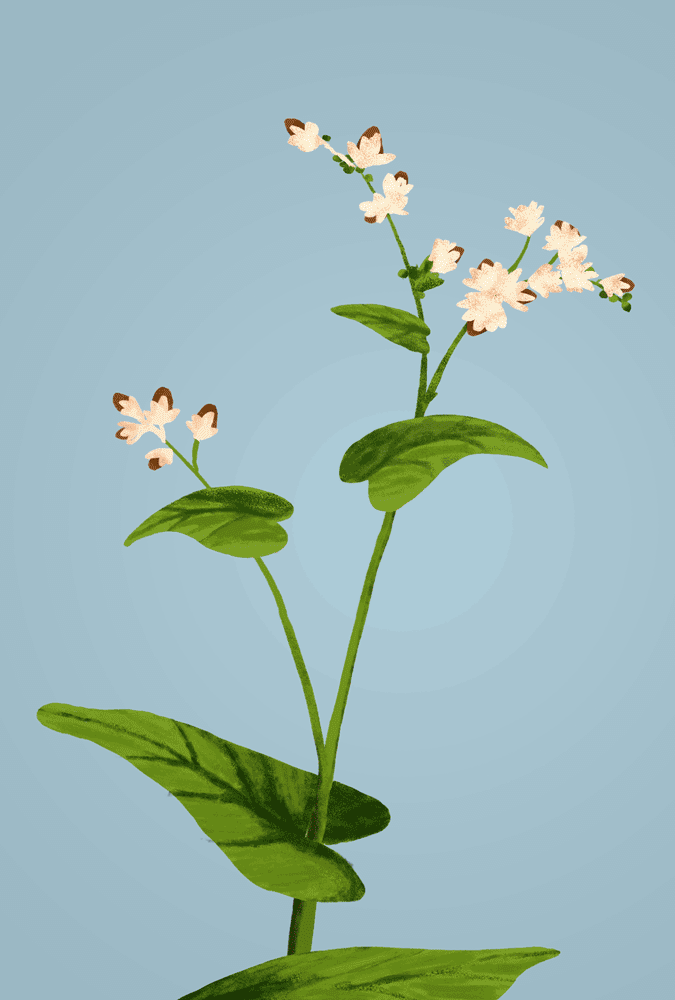
Another session lit me up in a way I did not expect: buckwheat. It’s a cover crop that builds soil and feeds pollinators, which we already utilize, but I saw something else. I saw a bicycle-powered mill on our farm. I saw kids grinding buckwheat into flour and realizing—maybe for the first time—that pancakes begin in the soil, not a box. My family used to buy buckwheat pancake mix from Clifton Mill for Christmas breakfast every year. Suddenly, that childhood memory connected to soil health and regenerative agriculture. It felt full circle.
I also learned about “Herb Hubs” from Rural Action in Athens—shared-use facilities where small farmers can access equipment they could never afford alone: dehydrators, freeze dryers, specialized washers. Infrastructure like that makes small-scale farming more viable and more resilient. Even during our lunch I made a new friend from Sunbury Urban Farm, a 15-acre nonprofit in Columbus with a thriving educational maple tapping program. They don’t bottle or sell syrup commercially. It’s simply educational and it’s wildly successful.
It reminded me that as a non-profit farm, our impact doesn’t always have to be about “scaling up” like a corporation. It can be about depth. It’s about being the hub where the community learns to sustain itself. The key is connection.
Seeds, Stories, and What We Pass On
Have you ever been to a Seed Social? Let me tell you, it’s genius. Yes, it’s a place to share and swap seeds. But the real magic is the conversation. The idea, as it was explained to me, was to help a notoriously introverted bunch open up and connect around a shared love. Put a group of growers in a room with really cool seeds, and the rest follows naturally.
It was also here where my imposter syndrome truly began to fade. I was reminded by an incredible artist that farmers are so much more than just growers of food. They can be artists, musicians, storytellers, dancers, and literally everything else imaginable. Before I left, I purchased a beautiful photograph featuring an okra pod reaching toward the light of a sunny day. The artist, Love’Yah Stewart of THKLUVLTR Photography, is a Black urban farmer and agricultural photographer whose work documents farm life, wildlife, and the hands that tend the land. Her images often center local Black farmers, grounding agriculture not just in soil, but in story.
The piece described how okra traveled across the Atlantic, survived unimaginable circumstances, and carried knowledge and culture with it. It spoke of the Middle Passage, of plantation fields, of generations who refused to let their foodways disappear. It wasn’t just about a vegetable; it was about resilience, about preserving what grows in our communities and honoring the people who tend it.
That okra print felt like a small window into that larger truth. I wasn’t just looking at a crop; I was looking at inheritance. It reminded me that food is never just food. It is history, identity, survival, and care. It’s a story we are tasked with keeping alive.
 Where I Landed
I’m not coming back to the farm chasing perfection. I’m not interested in “food fear” or judging what’s on someone’s plate.
But I am newly interested in soil and I’m curious about how we can continue building a farm that models care for land, animals, and people in tangible ways. I’m curious about how we can connect kids not just to cute goats and sunflower fields, but to the invisible life beneath their feet.
Maybe “organic” isn’t just a label. Maybe it’s a relationship.
A relationship between soil and seed, farmer and neighbor, past and future.
For someone who once quietly rolled her eyes at the word, I’m surprised to find myself thinking about microbes and cover crops. And I’m grateful.
Because what I realized this weekend is that generosity can make the difference. Sharing what works, our stories, inviting farmers into leadership. Staying centered on our values while finding common ground. It isn’t just a catchy conference theme—it’s the work we’re doing every single day.
The future will be what we choose to build.
I’m excited about what we’re growing. And as the person who communicates our farm’s mission to the world, I can’t wait to tell you more about it.