

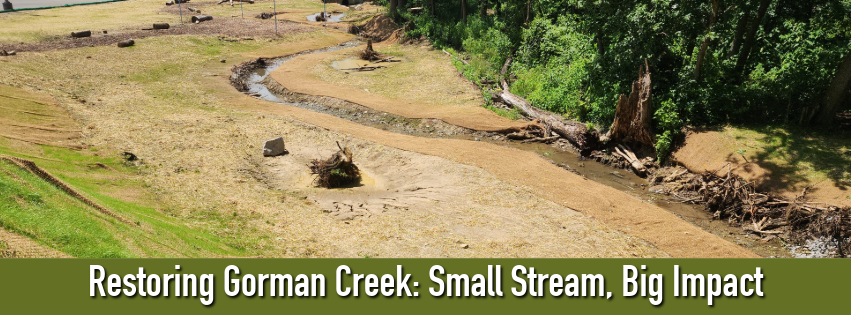
Gorman Creek is one of the hidden ecological lifelines of Gorman Heritage Farm. This small headwater stream begins on the farm’s property and runs through the farm before eventually joining Mill Creek, a much larger waterway that flows through the Cincinnati region and into the Ohio River.
Today, Gorman Heritage Farm is nearing completion of an important environmental restoration project focused on improving the health of this creek. The work is part of a broader effort to restore wildlife habitat and improve water quality throughout the Mill Creek watershed.
In 2023, Gorman Heritage Farm received funding through the U.S. Environmental Protection Agency’s
Section 319 Nonpoint Source Implementation Program, administered by the
Ohio Environmental Protection Agency, to support this restoration effort.
From Pavement to Living Landscape: Restoring Gorman Creek
Understanding Gorman Creek
Gorman Creek begins on the property of Gorman Heritage Farm to the north of the farmyard, flowing through the farm’s property before veering underground on its way to Mill Creek.
Along its path, the creek runs through or alongside several key areas of the farm, including:
- The farmyard
- Vegetable fields
- The Welcome Center
- The parking area to the south of the farm
Because the farm controls nearly the entire upstream drainage area, it has a unique opportunity to improve water quality and restore the creek’s natural ecosystem.
Why Restoration Is Needed
Over time, Gorman Creek has become severely degraded. The stream channel has been eroding and cutting deeper into the soil, sending large amounts of sediment downstream.
This excess sediment covers the rocky streambed that aquatic insects and other organisms rely on to survive. When these insects disappear, the entire stream ecosystem becomes stressed.
Scientists studying the creek have found limited aquatic life, indicating that the ecosystem is under strain. Although southern two-lined salamanders have been observed—suggesting potential for a healthy headwater habitat—sensitive aquatic insects are largely absent due to the heavy buildup of silt.
These issues affect more than just the creek on the farm. Sediment and nutrients flowing from Gorman Creek contribute to water quality challenges in Mill Creek, a 28-mile waterway that drains a 166-square-mile watershed across the Cincinnati region before entering the Ohio River.
Restoring this small headwater stream is an important step toward improving the health of the larger watershed.
Key Improvements Being Made
The restoration project includes several strategies designed to stabilize the creek, slow water flow, and reduce pollutants entering the stream.
Removing Impervious Surfaces
When rain falls on hard surfaces such as asphalt, the water runs off quickly instead of soaking into the ground. This fast-moving runoff carries sediment and pollutants directly into nearby waterways.
To address this issue, portions of pavement are being removed from the parking lot south of the farm along the western flow of the creek. Close to one acre of asphalt is being removed and replaced with native plants and meadow habitat.
In addition to improving stormwater infiltration, this restored landscape will also serve as an outdoor classroom, allowing visitors and students to learn directly from the site.
Constructing a Bioretention Wetland System
In the area where the asphalt was removed, a three-cell bioretention wetland system has been installed. This system is designed to treat runoff from approximately 20 acres of farmland.
The wetland system will:
- Capture drainage from the livestock barnyard, crop fields, and nearby residential properties
- Slow down water flow and filter pollutants
- Remove sediment and excess nutrients before water enters the creek
- Offer important fish-free breeding habitat for critters like salamanders and frogs
By holding and filtering runoff, the wetlands help prevent pollutants from reaching Gorman Creek and eventually Mill Creek.
Stabilizing the Creek Banks
Another important component of the project focuses on stabilizing the creek’s eroding banks.
Live brush layering was installed along the curved banks of the creek to help stabilize the soil and limit erosion. This technique uses natural plant materials that take root and strengthen the streambank over time.
By reducing erosion along the creek’s edges, this approach helps limit the amount of sediment that washes into the water.
Recontouring the Creek and Installing In-Stream Features
The flow of Gorman Creek has also been reshaped to better mimic the natural patterns found in healthy streams.
The creek channel was recontoured to add approximately 20 linear feet, creating a more natural S-shaped flow rather than the previous straight channel. The original creek bed was blocked—but not filled—to allow it to function as a forested wetland during extreme rain events.
Several in-stream structures were also installed, including:
- Stream pools
- Rock riffles
- Rock cross-vane riffles
- Log-vane riffles
These structures help slow the movement of water as it flows downstream toward Mill Creek. Slower water allows sediment and pollutants to settle out before the water leaves Gorman Creek and enters the larger watershed.
Sustainable Farm Practices
The restoration work builds on the farm’s existing commitment to sustainable agriculture practices and land stewardship.
Gorman Heritage Farm already uses several methods designed to protect soil and water quality, including:
- No chemical fertilizers
- Cover crops in all fields
- Conservation tillage
- Water bars and drainage management on trails
- Swales and reforestation to slow runoff from hillsides and pastures
These practices help reduce erosion and prevent nutrients from washing into nearby waterways.
Looking Toward a Healthier Creek
The long-term goal of the project is to restore Gorman Creek so it can function as a high-quality primary headwater stream.
Healthy headwater streams play a critical role in watershed ecosystems. They filter water, support biodiversity, and provide refuge for fish and other organisms during stressful conditions such as floods or pollution events.
Because Gorman Heritage Farm hosts thousands of visitors and educational programs each year, the restoration will also serve as a living classroom. Students, families, and community members will be able to observe firsthand how conservation practices can improve local waterways.
By restoring Gorman Creek, the farm is not only protecting its own landscape but also contributing to the health of the entire Mill Creek watershed.
A New Chapter for the Creek: What to Expect After Restoration
The Rhythm of the Seasons
Each season brings a new layer of life to the restored creek corridor.
Spring
In spring, the area comes alive almost overnight. The air fills with the calls of breeding amphibians, and clusters of eggs and darting tadpoles appear in the water. It’s a season of energy and renewal, as wildlife returns and activity reaches its peak.
Summer
By summer, the wetland is lush and vibrant. Native plants stretch skyward, lining the banks in dense greenery. Adult amphibians are plentiful, while insects buzz and dart through the warm air. Reptiles bask in the sun, and the entire ecosystem feels active and full.
Fall
As fall arrives, the pace begins to slow. Leaves gather along the banks, and migrating birds become more noticeable. Amphibians grow quieter, preparing for the colder months ahead, while the landscape takes on a calmer, more reflective tone.
Winter
Winter brings a quieter beauty. Though the vegetation fades back, the creek continues its steady flow. Tracks in the mud or snow reveal the presence of wildlife, reminding us that even in the stillness, life persists.
Wildlife Returns Home
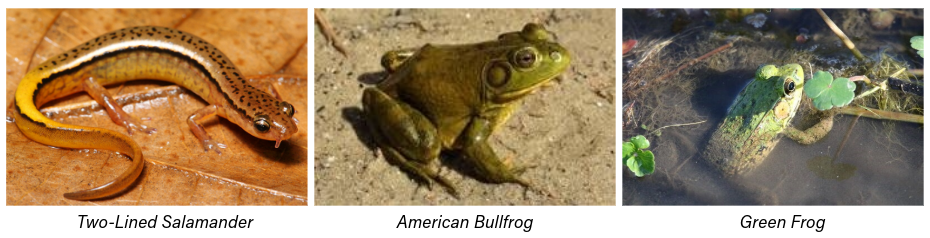
As the habitat matures, it will begin to support a diverse community of species. Visitors may encounter eastern garter snakes weaving through grasses, eastern box turtles sunning on a log, two-lined salamanders hunkering under leaf piles, and the familiar calls of green frogs and bullfrogs echoing across the water.
Beneath the surface, an equally important world thrives. Aquatic invertebrates, crayfish, freshwater shrimp, and the larvae of dragonflies and damselflies all play essential roles in maintaining the health of the creek. Together, these species form a balanced and interconnected ecosystem.
Growing a Native Landscape
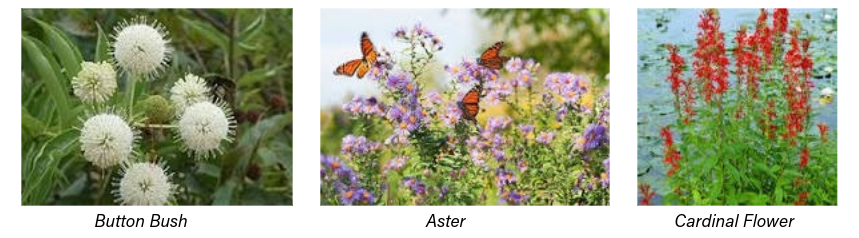
The restoration effort has introduced a wide variety of native shrubs, trees, and flowering plants—each chosen to provide food, shelter, and resilience. Chokeberry, buttonbush, winterberry, swamp white oak, and American elderberry are just a few of the species taking root, alongside arrowwood and blackhaw viburnum.
A carefully selected native seed mix adds even more diversity and seasonal color. Over time, blooms of asters, cardinal flower, wild senna, great lobelia, mountain mint, and tickseed sunflower will create a dynamic and ever-changing display.
A Living, Growing Ecosystem
Wetland restoration doesn’t happen overnight—it unfolds over years. But with time, this once-altered space will become a thriving natural area that supports wildlife, improves water quality, and strengthens the resilience of the surrounding environment.
What begins as a construction project ultimately becomes something much more: a living system, constantly growing and changing, and a place where people can witness the quiet power of ecological renewal.
A Place for the Community to Gather, Learn, and Grow
A Creek That Connects Us
Flowing past the farmyard, vegetable fields, Welcome Center, and visitor spaces, Gorman Creek touches many parts of the farm experience. Because the farm stewards most of the land that drains into the creek, it holds a unique responsibility—and opportunity—to shape its future.
But that story is changing. And our community gets to watch as it happens!
A Shared Future
This space is more than a restoration project—it’s a place for gathering, reflection, and discovery.
- Students can explore ecology firsthand, looking under rocks for reptiles, seeing frogs hop along, and seeking out turtles that may be sunning on a log.
- Families can walk alongside a recovering stream.
- Community members can see how thoughtful care of the land leads to lasting change.
A Landscape Reimagined
The restoration of Gorman Creek is not just about repairing a stream—it’s about creating a space where people and nature meet.
Visitors can now experience:
Native Meadow and Gathering Space
Areas once covered in asphalt have been opened and replanted with native species. These spaces invite people to walk, sit, and learn—turning a former parking area into an outdoor classroom and community hub.
Wetland Features That Teach and Transform
A series of small wetland ponds now capture and filter water from across the farm. As they clean the water naturally, they also provide a place to observe wildlife and understand how ecosystems work.
A Living, Flowing Creek
The creek itself has been reshaped to follow a more natural, winding path. Slower-moving water, rock features, and restored banks help reduce erosion while creating habitat for insects, amphibians, and other species.
Hands-On Stewardship
Sustainable farming practices across the property—like cover crops, no chemical fertilizers, and careful water management—support the health of the creek and offer real-world examples of conservation in action.
Come Be Part of the Story
As Gorman Creek continues to recover, it offers an open invitation: to learn, to connect, and to explore and seek out the flora and fauna that call this area home.
Healthy headwater streams like Gorman Creek play a vital role in the larger watershed, helping to filter water, support wildlife, and protect downstream ecosystems. By restoring this creek, the farm is contributing to the well-being of the entire Mill Creek—and everyone connected to it.
From Restoration to Resilience: Gorman Creek Restoration Brings New Life to Stream and Wetland Areas
A Healthier, More Natural Creek
The restored creek channel now more closely reflects natural stream patterns, helping water flow more efficiently while reducing erosion along streambanks. New in-stream features, including engineered log weirs and rock riffles, stabilize the channel, improve water movement, and create deeper pools that provide habitat and seasonal refuge for fish, amphibians, and aquatic life.
Reconnecting Water and Land
The project also reconnects Gorman Creek to its surrounding floodplain, allowing water to spread naturally during rain events. This restored floodplain connection helps slow stormwater, reduce downstream flooding impacts, and improve overall water quality.
Newly created wetland pools capture and filter runoff, encourage sediment settling, and help remove excess nutrients before water leaves the site. These improvements strengthen the ecosystem while creating valuable habitat for birds, pollinators, frogs, turtles, and other wildlife.
Signs of a Healthy Creek
What might you look for as a sign of a healthy creek? As you sit along the edge or walk the path around the wetland ponds, keep an eye out for clear or slightly tinted flowing water, a mix of slow pools and fast riffles, leaf litter and woody debris, and native plants growing nearby.
Listen for the sounds of frogs and birds, and keep your eyes open for splashes from salamanders or resting turtles on logs.
Cleaner Water for the Whole Watershed
Cleaner water plays an important role far beyond the creek itself. When sediment, excess nutrients, and pollutants are filtered naturally through wetlands and native vegetation, downstream waterways become healthier and safer for people, fish, and wildlife.
Improved water quality helps reduce algae growth, increases oxygen levels in streams, and creates better conditions for aquatic species to thrive. Cleaner waterways also support recreation, protect drinking water sources, reduce long-term maintenance costs associated with erosion and stormwater damage, and strengthen the overall health of the regional watershed.
A Landscape Designed to Thrive
The landscape itself now features varied elevations and natural contours designed to slow and retain water longer across the site. These enhancements increase groundwater recharge, improve floodplain function, and create a more diverse and visually appealing environment.
The entire project area has been replanted with native vegetation selected for long-term ecological health and habitat value. Native trees, shrubs, grasses, and flowering plants now help stabilize soils, improve biodiversity, and restore the area’s natural character.
A Place to Learn, Explore, and Watch Life Return
In addition to ecological benefits, the project creates new opportunities for Gorman Heritage Farm. It provides a new area for the community to connect to nature, for our campers and school groups to learn and explore, and for science and monitoring to continue as we watch for habitat to return and water quality to thrive.
The completed restoration represents a significant investment in cleaner water, healthier habitats, improved flood resilience, and a more sustainable future for the community.