

Habitat restoration often seems straightforward on paper. Identify invasive species, remove them, and give native plants the opportunity to thrive. In practice, however, ecosystems are far more complex than that. Every site has its own story, and sometimes the lessons we learn challenge our assumptions about what successful restoration looks like.
One such lesson came from a section of woods along the edge of Gorman Heritage Farm known as Kingsport Woods. What began as an exciting discovery of a remarkable native wildflower population eventually became a humbling reminder that nature doesn’t always respond the way we expect.
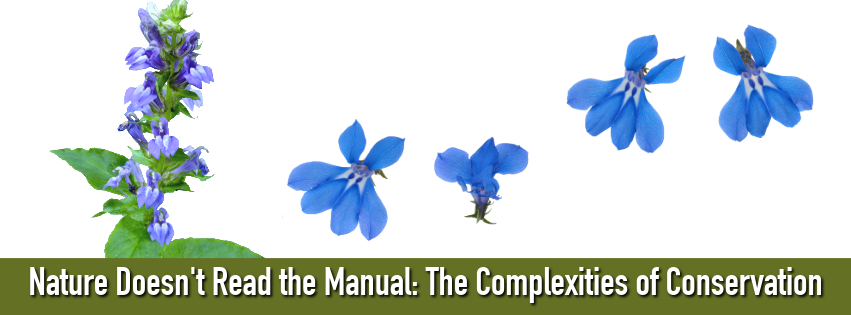
These woods are special for several reasons but I’ll focus on one right here, where around 2021 we found an amazing population of blue lobelia growing in the utility corridor at the edge of these woods. Blue lobelia, as its name plainly says, is blue. And there were a couple dozen individuals such as this, suppressed by honeysuckle and Japanese stiltgrass, but persisting in the gaps. Thriving even.
This so far, sounds like an uncommon but overall pretty normal find when we’re out there doing restoration work.
But it wasn’t…
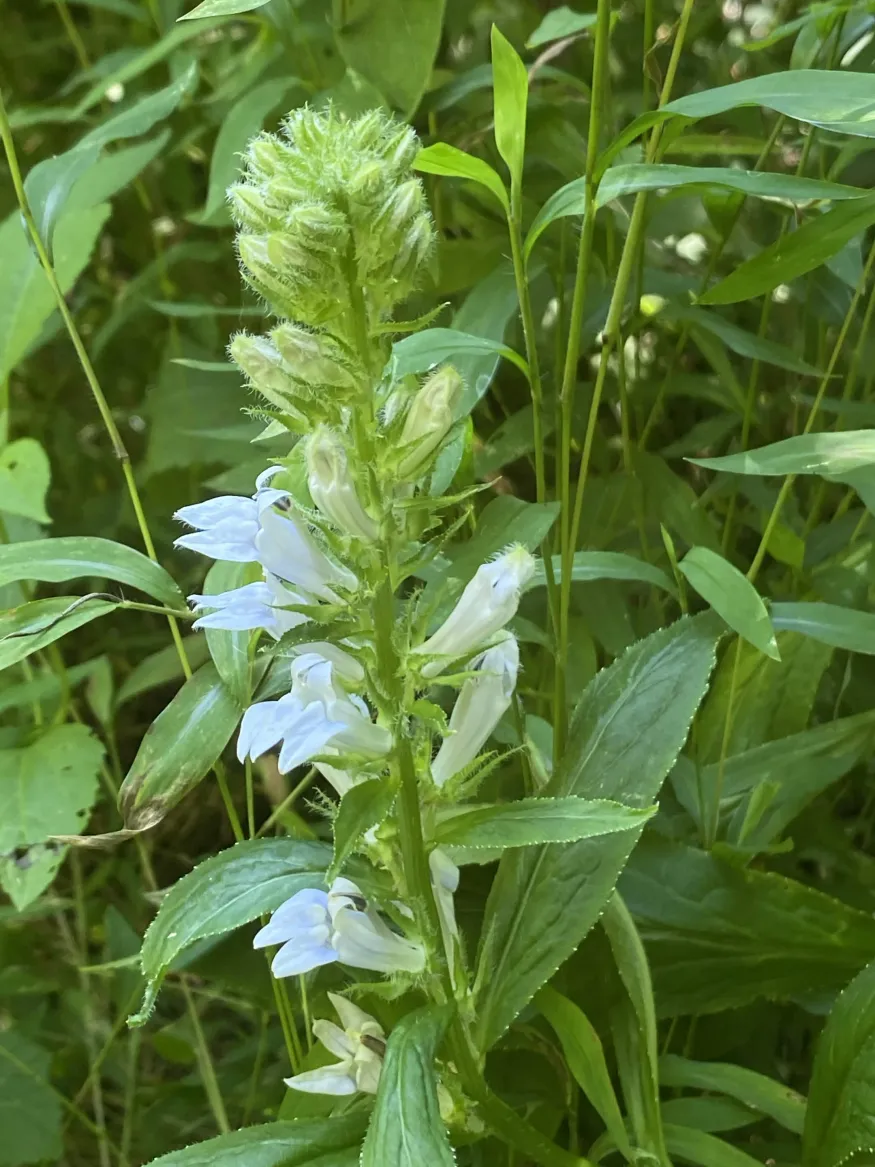
Many native plants flower in yellow, purple, or blue, while perhaps one percent have white forms. Rare for sure but it still seemed like a ‘normal’ find.
But no…
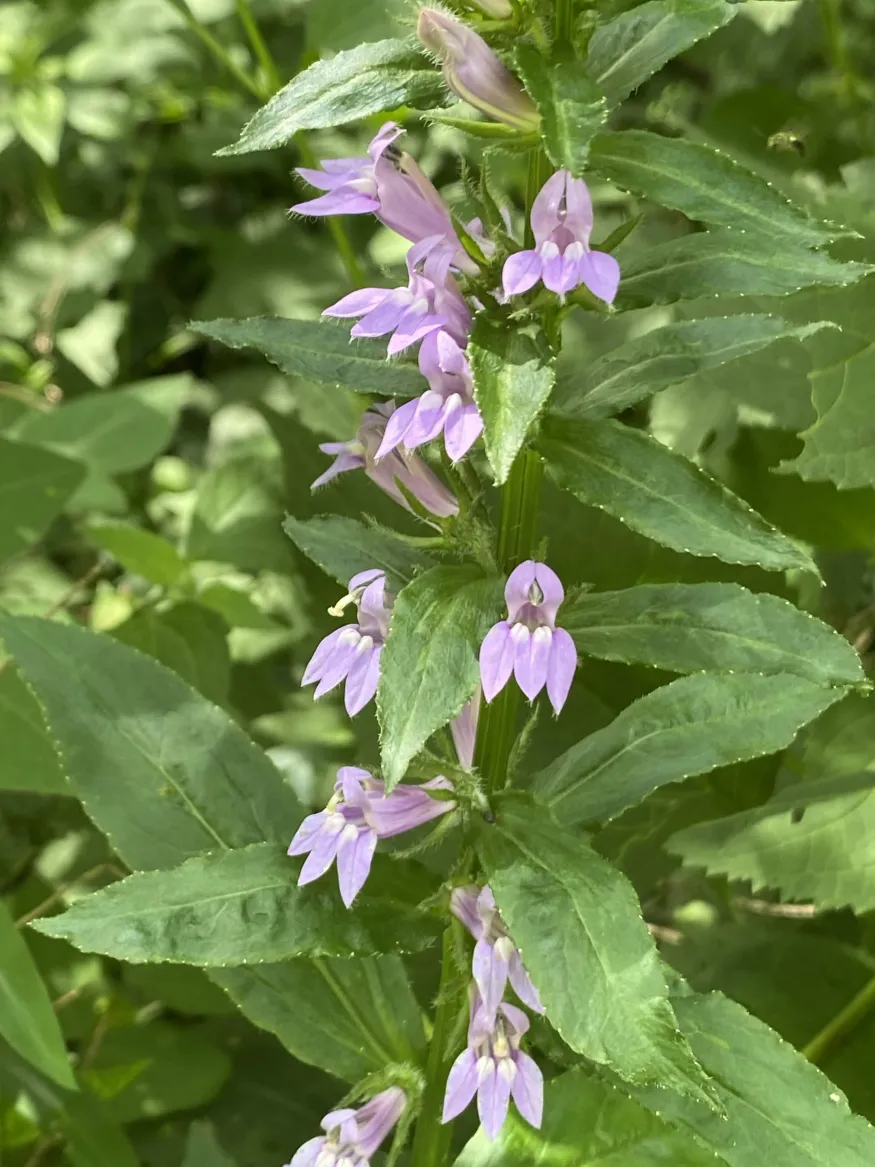
This was officially new territory for me. I’ve only seen online photos of this form and never from this region.
But it got better…
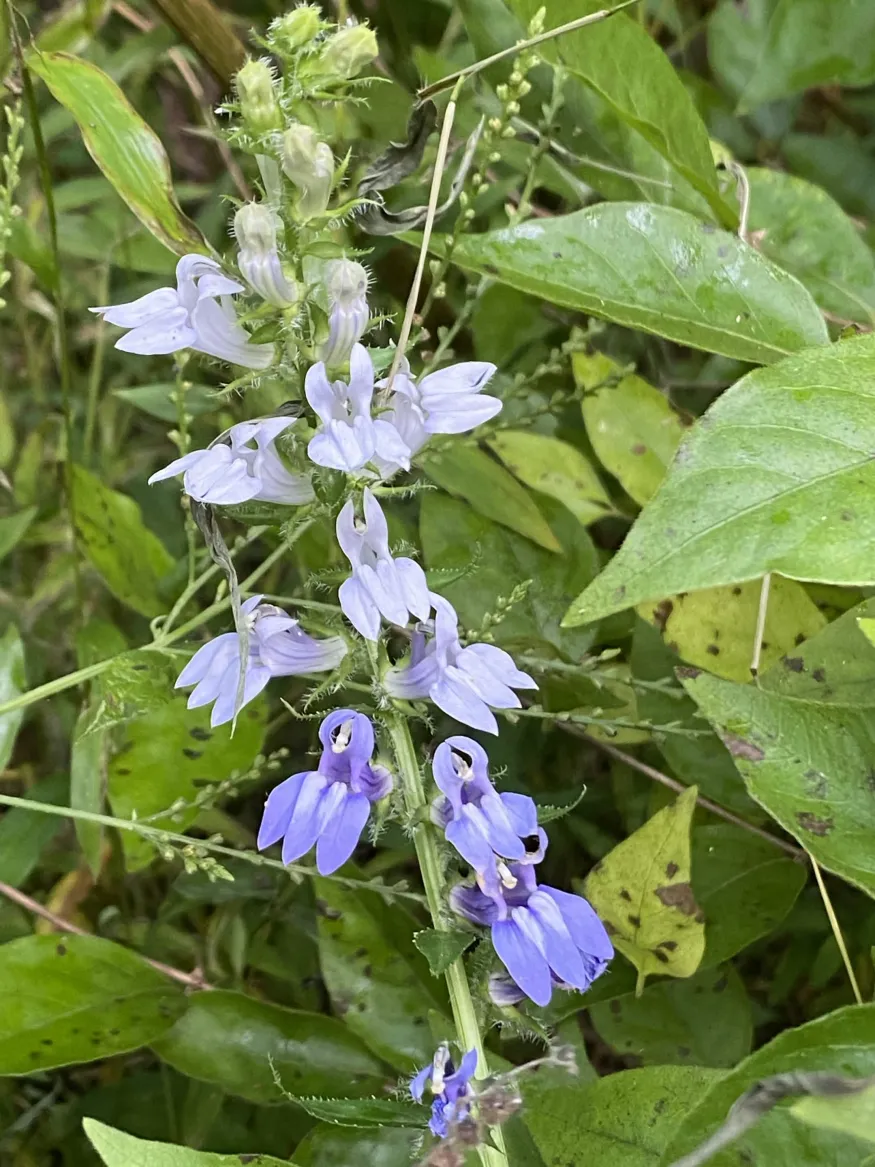
Some of the plants had ascasing spectrums of floral colors on the same plant, an extremely rare trait for sure. Imagine these growing in clumps of a dozen spires.
Other exotic forms were still to come….
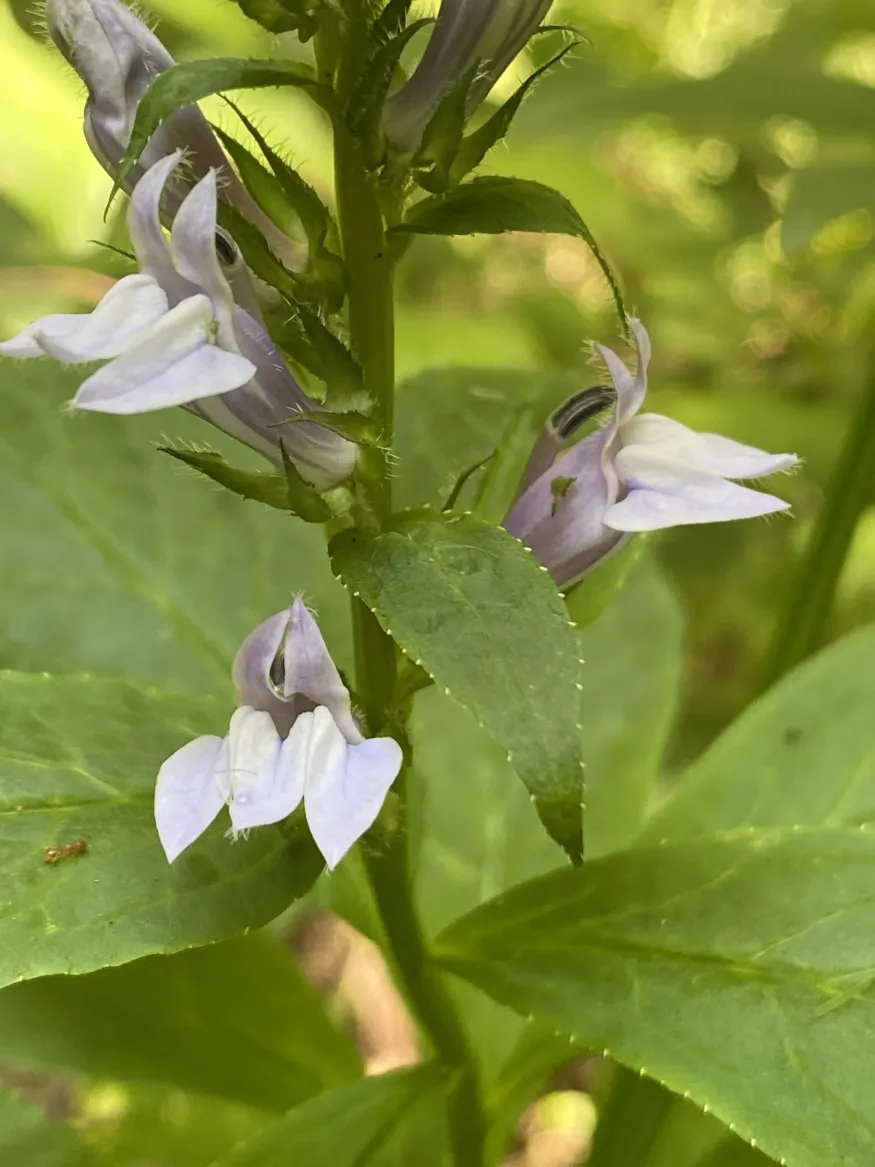
Pure lavender and two-tone forms like this with white “beards” were scattered about. The diversity of flowers in just this one species in this single are was incredible and nothing I’ve encountered before certainly. They’ve been strictly blue in my experience. I wondered if the nursery trade would be interested in seeds or cuttings. We could move them to different spots on the farm we were opening up in our work, maybe some in the Trosset Garden out front by the pond, they were going to be stunning!
And then…
… we killed them.
We removed the honeysuckle. Pulled the stiltgrass. Popped out the clumps of lesser celandine. We followed the manual and did everything right. But the following year the lobelia did not return apart from a pair of lonely blue stems looking on from the edge.
Other natives returned vigorously however. The thoroughworts, figworts, wingstem, milkweed, and hawthorns all surged into the sunlight we’d opened up, often blooming over our heads. In a normal spot we call this a nice simple success.
Two years of head-scratching followed until I concluded (best-guessed really) that the honeysuckle was doing something I didn’t expect, something paradoxical and beyond my ability to see at the time: it was creating and protecting blue lobelia habitat. It likely provided a living deer fence and allowed the lobelia population to bloom and reproduce profusely. The honeysuckle shaded out taller native plants and kept spaces open for these delicate plants, fostering little niches and keeping natural succession at bay.
Invasive plants often halt stall natural succession. Being an early-successional species, blue lobelia was benefiting from this otherwise tremendously harmful invasive shrub and the cessation it created. Our restoration team cut the brake lines and kinda…. watched the natural succession train trample the very thing we thought we were protecting.
Humbling.
As habitat restorationists it’s often easy and comforting to indulge ourselves in a little black-and-white thinking. Invasive plants must go so we remove them, expecting only unambiguously positive outcomes – what else is there to do?
Reality is more nuanced than that though. And I’d say more interesting.
We don’t know what’s going to happen from doing our work, we don’t know if the plot we’re clearing on will surge with new life – or if the trillium we just uncovered was just made a wide-open target for hungry deer and now we just lost a rare plant. Usually it’s a bit of both. We act, we observe, and we live with the consequences.
Thank you for everything you do at the farm everyone. I’ll see you soon.