

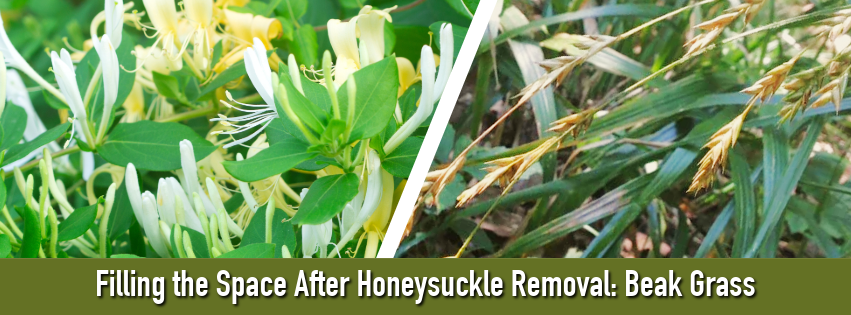
Clearing the Front Plot
Our volunteer group last week made great progress clearing honeysuckle in the plot near the front of the farm. With the work they put in, we should be able to finish that section in another hour or so.
Once honeysuckle is removed, the job isn’t quite done.
Nature doesn’t like empty space, and if we leave bare soil alone for long, something will move in — usually more invasive plants. To give native species a better chance, we follow up with seed mixes suited to the site, scattering them over the cleared area so desirable plants can establish before the invasives return.
A Surprise Find: Beak Grass
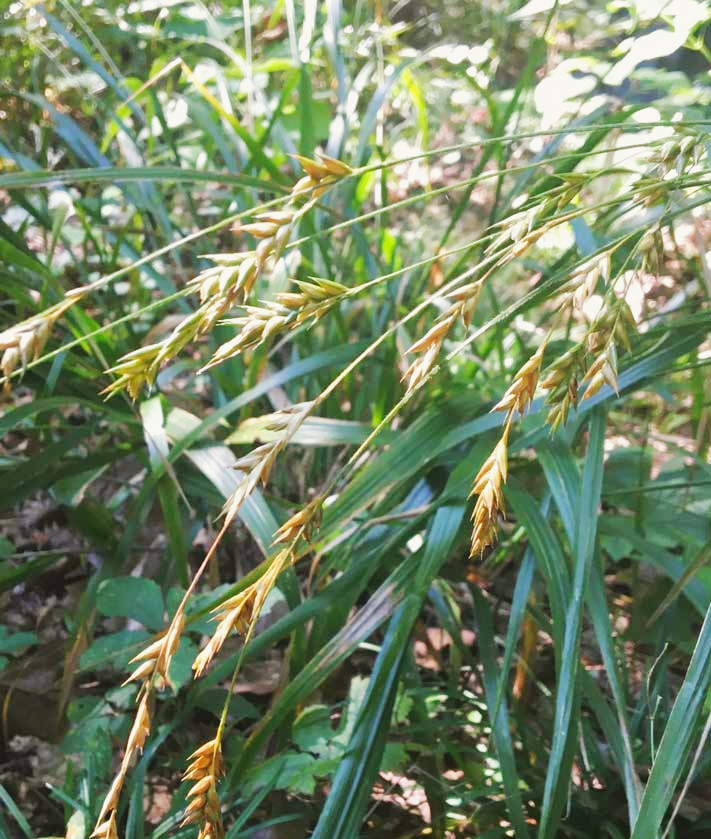
While working near the entrance recently, we came across a small colony of beak grass (Diarrhena obovata). This is a native woodland grass that tends to show up in higher-quality natural areas, so it was a nice thing to find.
There were only a few clumps, but they were heavy with seed, so we collected and scattered some of it nearby. That’s one of the benefits of invasive removal work — we never quite know what we might uncover once the honeysuckle is out of the way.
A Native Grass for Tough Spots
Beak grass is a good example of a plant that doesn’t get much attention but deserves more use. It does well in dry, shady areas, tolerates filtered light, and is not bothered by deer. It also has a clean, upright look that works nicely in natural landscaping.
If you’re interested in learning more about this species, there’s a great resource here -> Learn more about Beak Grass
Plants and seed are sometimes available locally. Keystone Flora near Spring Grove Cemetery carries clumps, and seed can also be purchased online if you’re looking for something different to try in a difficult spot in your yard.
Restoration work often starts with removing the problem, but the real goal is always the same: fill the space with something better.