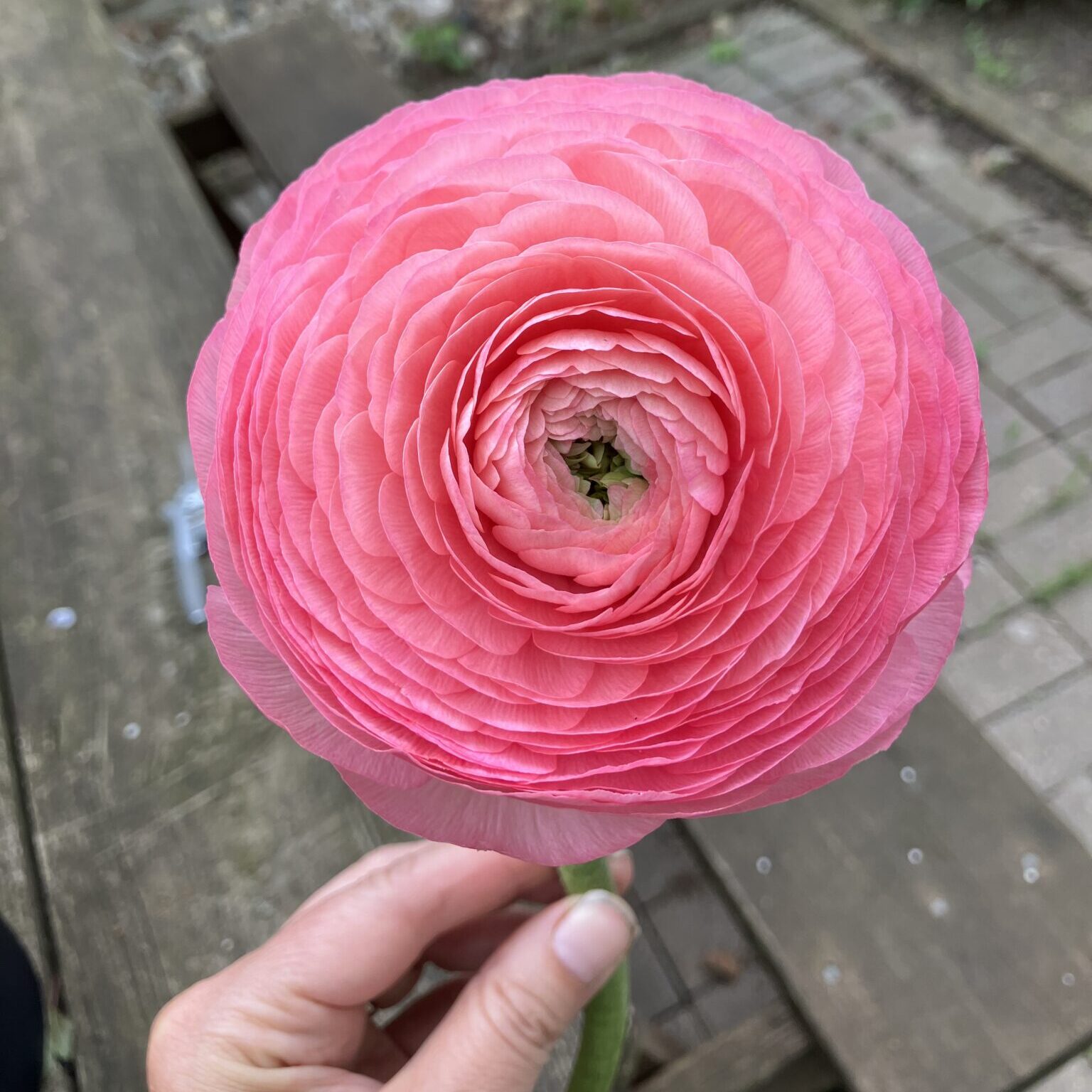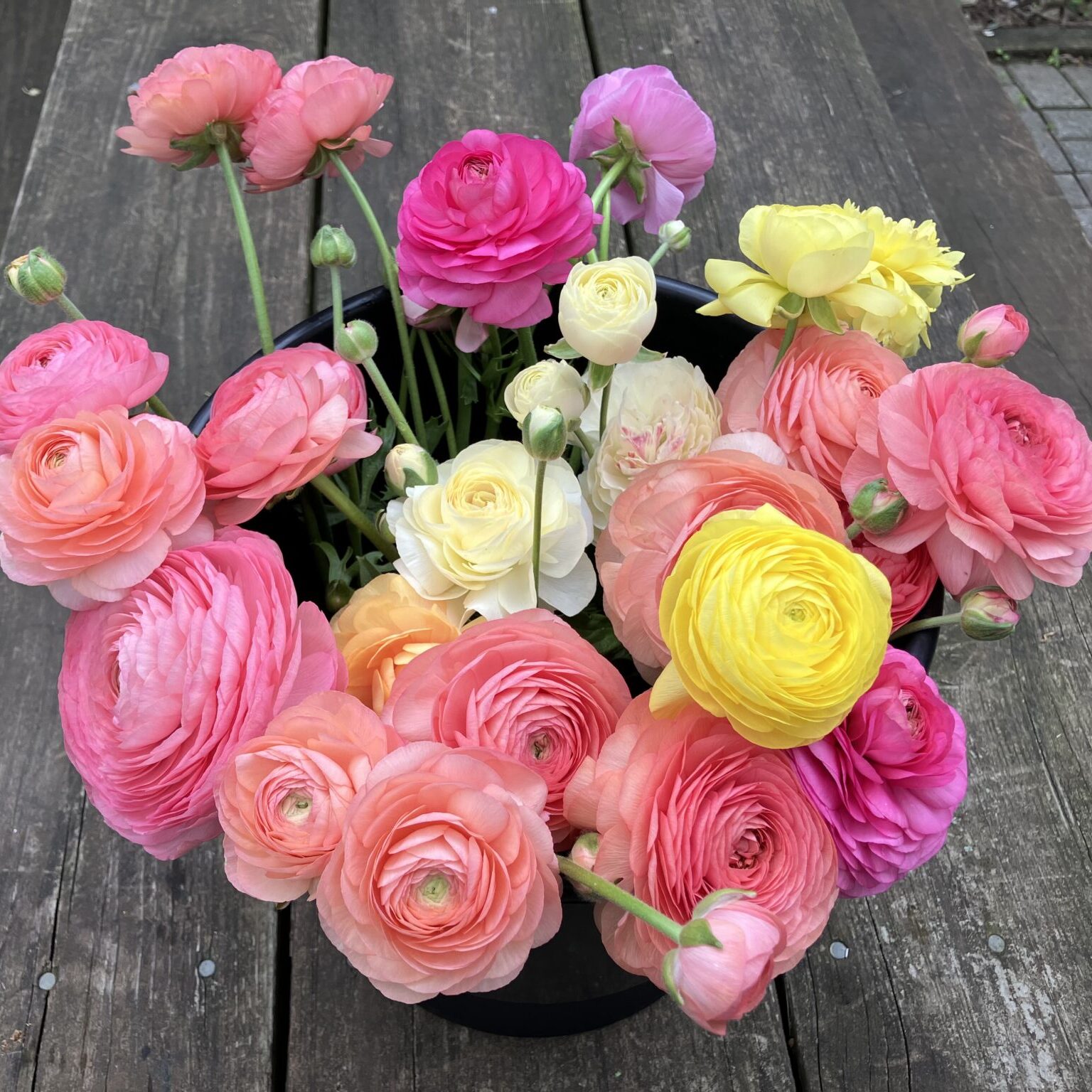


Ranuncu…huh, you say?
Yes, it’s a bit of a mouthful—but these flowers are as unique as their name!
Ranunculus are cool-season flowers that we start in very early spring here in southern Ohio. They’re incredibly beautiful and especially popular with florists for wedding work thanks to their sophisticated look and muted palette, offering sought after blushes and corals.
Small Starts, Big Blooms
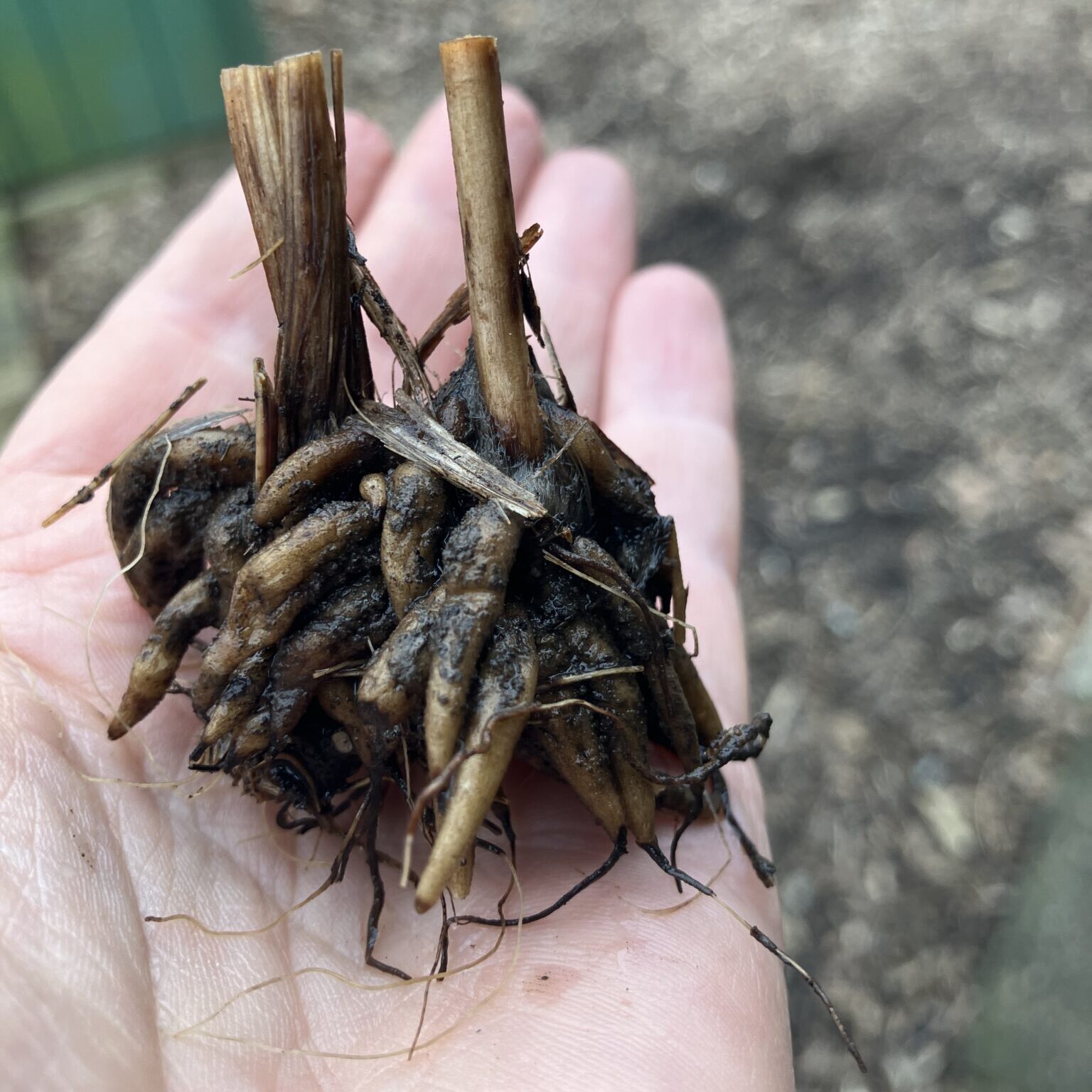
Each plant begins as a small, brown, spider-like corm—similar to a bulb. It’s quite a humble beginning for such a grand finale. Mother Nature is full of beautiful surprises!
Corms can be planted directly in the ground or in a high tunnel, as long as temperatures don’t dip below 28°F. Because ranunculus dislike heat, getting an early start is key. To encourage earlier blooms, we presprout our corms here on the farm.
Here’s how:
- Soak the corms in warm water for a few hours.
- Plant them in seed trays filled with moist potting soil.
- Place the trays in a cool, dark location—like a garage.
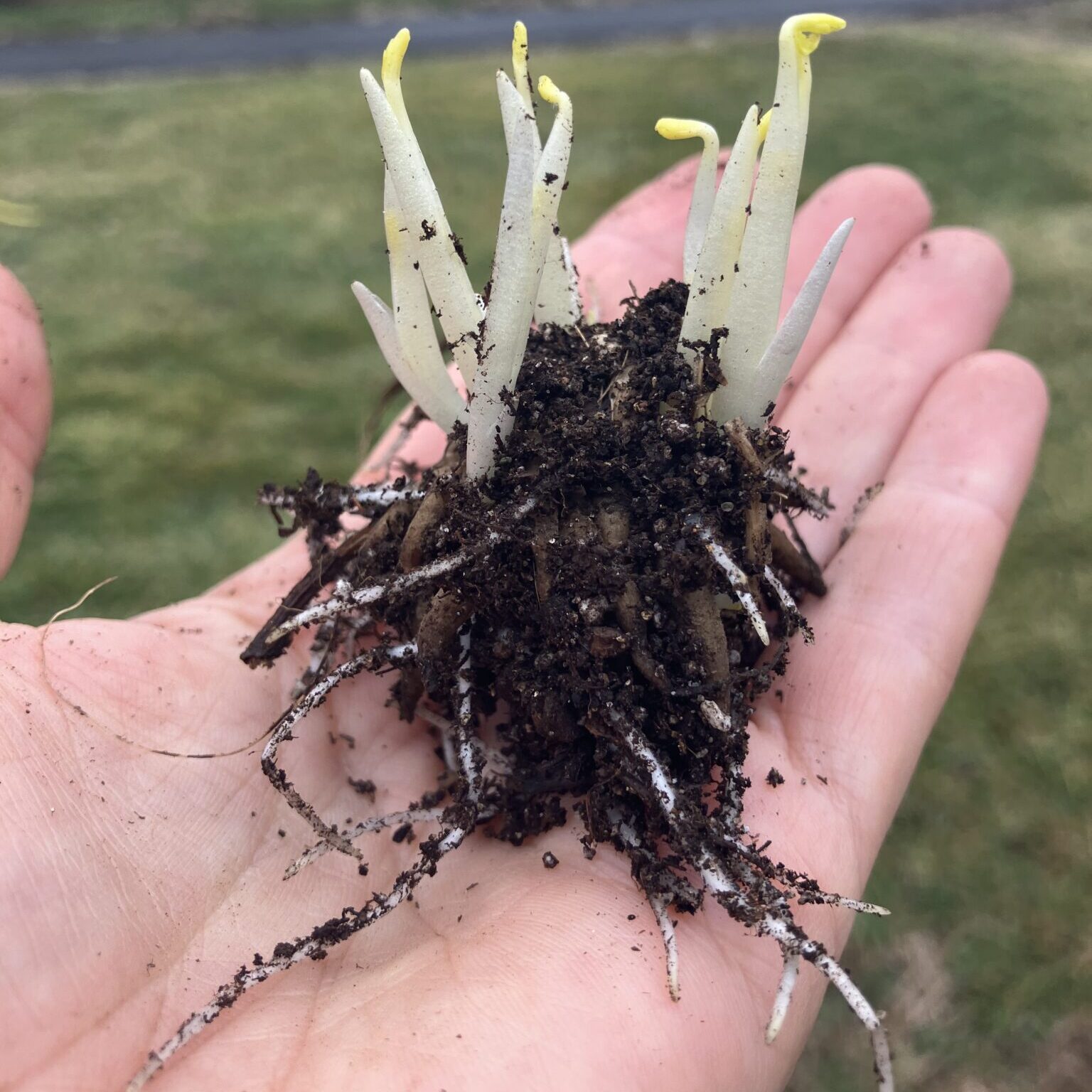
After about two weeks, you’ll notice tiny white “hairs” forming on the corms. That’s a good sign! These are new roots developing, and it means your corms are ready to be planted in the ground as soon as possible.
Tucked In for Winter Growing
We plant our sprouted corms in our hoophouse in mid February. BRRRR it’s cold but they love it! After they are snuggled into their new home we put a light layer of composted leaves on top. Leaves are the perfect temperature regulator as they provide insulation when it’s cold and also cool the soil down when it’s too hot. They also add beneficial nutrients to the soil when they break down. A win for everyone!
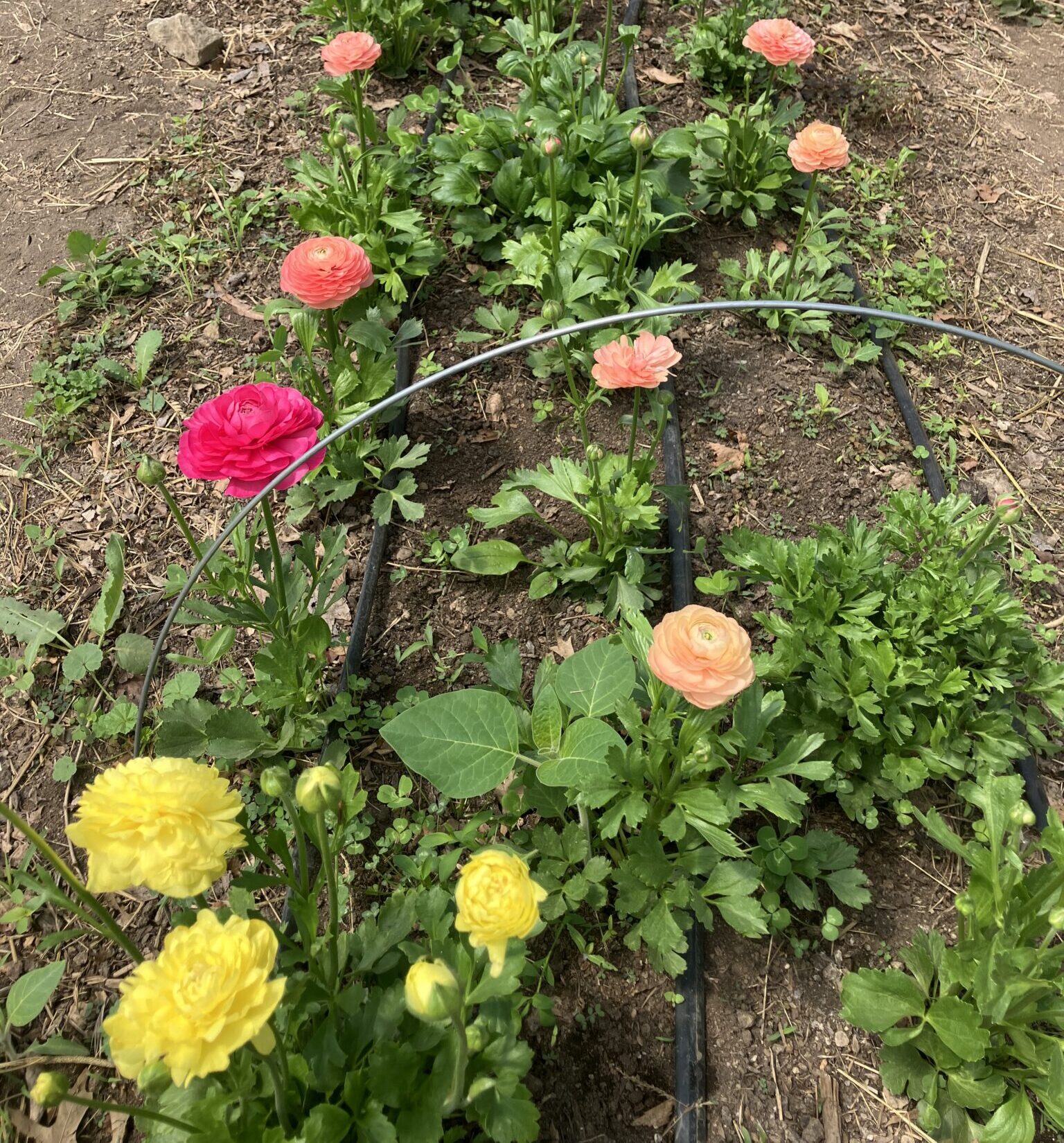
The Grand Finale
Ranunculus take about 90 days from start to finish. They will start to put on their spectacular show in early spring and then start to slow down when it gets too hot (very relatable!). Our corms started in early February will be finished by early June. We then wait for the flowers to completely die allowing the plant to focus those nutrients back to the source… the corm. We then dig up the corms, let them dry out and then hang them in a cool dry place in a mesh sack until we start the process all over again in February. Corms can continue to produce year after year if handled and stored properly. It’s an investment that is clearly worth it, not only for their long shelf life, but also for their magnificence. I mean, look at these beauties! Okay let’s try again, run-nung-kyuh-luhs. Or you can call them by their other name, Persian Buttercups. It’s sweet right? Stop by the farm in May to catch the stunning, but swift display!